Muscle Research
Understanding the extremes of muscle performance – from elite athletes to children with muscle disease
The Muscle Research group at Murdoch Children's Research Institute (MCRI) is dedicated to understanding genetic variations that impact the extremes of muscle performance, from elite athletes to children with muscle diseases.
Skeletal muscle makes up around 40 per cent of our body weight and is a highly adaptable tissue, responding to everyday stresses like exercise. While some genetic changes can enhance muscle function and athletic performance, others can impair muscle function and lead to disease.
Our research focus
A major focus of our work is the ACTN3 gene, often called the “Gene for Speed.”
We were the first to show that one in five people worldwide do not make ACTN3 protein due to a genetic change in the ACTN3 gene (R577X). We now know that ACTN3 is vital for elite sprint performance. In fact, having ACTN3 is essential for an Olympic-level sprinter.
ACTN3 also affects muscle diseases. We showed that not having ACTN3 slows disease progression in Duchenne muscular dystrophy – an inherited muscle disease that affects one in 6,000 boys. Our research on ACTN3 and other sports genes continues through our leadership in international consortiums like Athlome Consortium.
How we study muscle disease
At the other end of the spectrum are children with muscle disease.
We are part of the National Muscle Disease Bio-Databank where we collect and store samples such as blood and clinical information from patients with muscle disease.
The blood sample is used to create induced pluripotent stem cells (iPSCs) that can be turned into skeletal muscle in the laboratory. These patient samples allow us to study the impact of their disease on the immune system and to generate models of the patient’s disease in a dish.
Our research team
Our team consists of laboratory scientists, genetic counsellors, nurses and neurologists who work together to improve our understanding of the complexity of muscle performance and disease.
More information
- Skeletal muscle performance and disease
- Neuromuscular disorders
- ‘Gene for speed’ linked to severity and progression of Duchenne muscular dystrophy
Contact us
Dr Peter Houweling
Team leader/ Senior Research Fellow
Email:
show email address
Group Leaders


Team Leaders


Group Members



Our platforms

FlexBio - Contract research platform for skeletal muscle analyses
FlexBio partners with academic and industry researchers to deliver comprehensive pre-clinical disease modelling and therapeutic screening services.
With over 15 years of expertise in both in vitro (tissue culture) and in vivo (pre-clinical mouse) skeletal muscle model analyses, we offer an end-to-end service that includes:
- Ethical and institutional approvals
- Complete data analysis packages
- Detailed, customizable reports
National Muscle Disease Bio-databank (NMDB)
Launched in 2022, the National Muscle Disease Bio-databank (NMDB) is housed within the MCRI’s dedicated biobanking facility and contains biological samples (blood, skin and cell lines) and clinical information from children with genetic muscle diseases from across Australia.
Using these precious patient samples our team aims to expedite discoveries from the laboratory into clinical trials to improve outcomes for children with genetic muscle disease.
The combination of stored patient samples and clinical information will be used to deepen our understanding of disease mechanisms and unlock potential treatments. These samples are already being used to find disease markers and to create stem cells that can be grown into muscle in the lab.
For more information:
Visit National Muscle Disease Bio-databank
Our projects
The Gene for Speed: ACTN3 and Muscle Performance in Health and Disease
ACTN3 is the gene that provides instructions for making the protein α-actinin-3, which is present in fast-twitch skeletal muscle fibres. Around 20% of people worldwide lack α-actinin-3 due to inheriting two copies of a premature stop codon (X) at position 577 of the ACTN3 gene.
Our research has shown that the loss of α-actinin-3 doesn’t cause disease but is detrimental to sprint performance in elite athletes and the general population. More recently we discovered that individuals lacking α-actinin-3 maintain body heat more effectively in cold environments.
Our current work explores how ACTN3 genotype influences muscle metabolism in today’s world, where sedentary lifestyles and calorie-dense diets have led to rising rates of obesity and type 2 diabetes.
α-Actinin-3 deficiency also contributes to reduced muscle mass and strength and is linked to a greater risk of falls in the elderly. Our studies show that ACTN3 plays a critical role in regulating muscle size and in how muscles adapt to exercise, disuse (immobilisation), and nerve damage (denervation).
We’ve also found that α-actinin-3 deficiency provides some protection against muscle loss caused by glucocorticoid treatments, which suggests that preserving muscle mass under stress may also play a role in the evolutionary selection of the ACTN3 577X variant.
We are now investigating how ACTN3 affects muscle growth in response to testosterone and other anabolic steroids, and what this means for performance in elite athletes.
Effects of testosterone exposure on muscle performance
Doping violates the principles of fair play and sportsmanship, giving an unfair advantage to those who engage in it. Some athletes dope with testosterone to increase muscle mass and strength. However, they are able to escape doping detection by microdosing or dosing in on/off cycles.
There is now some evidence to suggest that even a brief period of testosterone treatment can have long lasting effects on muscle performance even after cessation of use. This remains to be verified, but if true, this would suggest that athletes who test positive for testosterone doping should receive a life-long ban from competition.
In collaboration with the University of Rome (Foro Italico) and Hong Kong Baptist University, with funding from the World Anti-doping Agency, we are now working to better understand testosterone action in skeletal muscle and explore new ways to detect doping in athletes.
Using Induced pluripotent stem cells (iPSCs) to generate human skeletal muscle models in a dish
From a blood sample we can create induced pluripotent stem cells (iPSCs), which are a tpe of artificial cell created by reprogramming adult cells into an embryonic-like state. These cells provide an unlimited resource that can be grown into almost any tissue of the body.
We are particularly interested in skeletal muscle and use iPSCs created from patients with genetic muscle diseases, like Duchenne Muscular Dystrophy (DMD), to study how muscle disease develops and to test new potential treatments – all without the need of an invasive muscle biopsy.
This approach provides us with a powerful tool that can be used to better understand disease mechanisms and find the next generation of therapies for children with muscle diseases.
Creating an immune cell atlas of patients with chronic muscle disease
The immune system plays a vital role in repairing skeletal muscle following injury. But in chronic muscle diseases like Duchenne muscular dystrophy, the muscles are susceptibility to damage. This repeated injury leads to a ‘toxic’ immune response and the muscle being replaced with scar tissue/fibrosis and fat.
Our goal is to define the immune cells that are dysregulated in disease by creating an “immune cell atlas” of the blood samples from children affected by genetic muscle diseases.
This will enable us to identify the precise immune cells that impact disease and identify potential new immune-therapeutic targets (immunotherapies) that aim to dampen the immune response and facilitate proper muscle repair in children with chronic muscle diseases.
Funding
Thank you to our supporters.
- National Health and Medical Research Council (NHMRC)
- Medical Research Future Fund (MRFF)
- Johnstone Foundation
- National Stem Cell Foundation
- Muscular Dystrophy Australia
- Gillin Boys Foundation
- Vanguard
- World Anti-Doping Agency (WADA)
Collaborators
We partner with;
- Professor Yannis Pitsiladis
- Professor Stewart Head, Western Sydney University
- Professor Oliver Friedrich, Friedrich Alexander University
- Professor Peter Curry
- Professor Christina Mitchell
- Professor Catriona McLean
- Professor Jon Oakhill, St Vincents Institute
- Dr George Tachas
Featured publications
Peter J Houweling, Chrystal F Tiong, Leonit Kiriaev, Roberto Díaz-Peña, Patrick K. Albers, Harrison Wood, Victoria Wyckelsma, Tegan Stait, Tomas Venckunas, Pedro L. Valenzuela, Adrián Castillo-García, Marius Brazaitis, Yemima Berman, Jane T. Seto, Håkan Westerblad, Monkol Lek, David Thorburn, Alejandro Lucia, Stewart I Head, Kathryn N North. α-Actinin-3 deficiency protects from the effects of acute cold exposure through altered skeletal muscle Ca2+ and OXPHOS signalling. BioRxiv (2025)
Kelly N Roeszler, Michael See, Lyra R Meehan, Giscard Lima, Alexander Kolliari-Turner, Sarah E Alexander, Shanie Landen, Harrison D Wood, Chrystal F Tiong, Weiyi Chen, Tomris Mustafa, Peter J Houweling, Nir Eynon, Severine Lamon, Yannis Pitsiladis, David J Handelsman, Fernando J Rossello, Mirana Ramialison, Kathryn N North, Jane T Seto ACTN3 genotype influences androgen response in skeletal muscle. BioRxiv. doi: https://doi.org/10.1101/2024.04.25.591034 (2025)
Stephanie Best, Jeffrey Braithwaite, Ilias Goranitis, Danya F. Vears, Monica Ferrie, Clara L. Gaff, Andrew J. Mallett, Tiffany Boughtwood, Kathryn N. North, Zornitza Stark. Using implementation science to navigate the complexity of integrating genomics into healthcare. Nature Medicine, 31:1739–1742 (2025)
Peter J Houweling, Vanessa Crossman, Chrystal F Tiong, Chantal A Coles, Rhonda L Taylor, Joshua S Clayton, Alison Graham, Katerina Vlahos, Sara E Howden, Kathryn N North. Generation of a human ACTA1-tdTomato reporter iPSC line using CRISPR/Cas9 editing. Stem Cell Research (2024)
Ian R Woodcock, George Tachas, Nuket Desem, Peter J Houweling, Michael Kean, Jaiman Emmanuel, Rachel Kennedy, Kate Carroll, Katy de Valle, Justine Adams, Shireen R Lamandé, Chantal Coles, Chrystal Tiong, Matthew Burton, Daniella Villano, Peter Button, Jean-Yves Hogrel, Sarah Catling-Seyffer, Monique M Ryan, Martin B Delatycki, Eppie M Yiu. A phase 2 open-label study of the safety and efficacy of weekly dosing of ATL1102 in patients with non-ambulatory Duchenne muscular dystrophy and pharmacology in mdx mice. PLoS One, 19(1):e0294847 (2024)
Joshua S. Clayton, Mridul Johari, Rhonda L. Taylor, Lein Dofash, Georgina Allan, Gavin Monahan, Peter J. Houweling, Gianina Ravenscroft, Nigel G. Laing. An Update on Reported Variants in the Skeletal Muscle α-Actin (ACTA1) Gene. Human Mutation (2024)
Houweling PJ, Coles CA, Tiong CF, Nielsen B, Graham A, McDonald P, Suter A, Piers AT, Forbes R, Ryan MM, Howden SE, Lamande SR, North KN. Generating an iPSC line (with isogenic control) from the PBMCs of an ACTA1 (p.Gly148Asp) Nemaline Myopathy patient. Stem Cell Research, 2021; 54
Wyckelsma VL, Venckunas T, Houweling PJ, Schlittler M, Lauschke VM, Tiong CF, Wood HD, Ivarsson N, Paulauskas H, Eimantas N, Andersson DC, North KN, Brazaitis M, Westerblad H. Loss of α-actinin-3 during human evolution provides superior cold resilience and muscle heat generation. The American Journal of Human Genetics, 108(3):446–457 (2021)
Seto JT, Roeszler KN, Meehan LR, Wood HD, Tiong C, Bek L, Lee SF, Shah M, Quinlan KGR, Gregorevic P, Houweling PJ, North KN. ACTN3 genotype influences skeletal muscle mass regulation and response to dexamethasone. Science Advances (2021)
Macarthur DG, Seto JT, Raftery JM, Quinlan KG, Huttley GA, Hook JW, Lemckert FA, Kee AJ, Edwards MR, Berman Y, Hardeman EC, Gunning PW, Easteal S, Yang N, North KN. Loss of ACTN3 gene function alters mouse muscle metabolism and shows evidence of positive selection in humans. Nature Genetics, 39:1261–1265 (2007)
Yang N, MacArthur D, Gulbin JP, Hahn AG, Beggs A, Easteal S, North KN. ACTN3 genotype is associated with human elite athletic performance. American Journal of Human Genetics, 73:627–631 (2003)
Muscle research news

NHMRC Ideas Grants to advance childhood treatments and diagnoses

Missing common protein could affect how muscles respond to testosterone
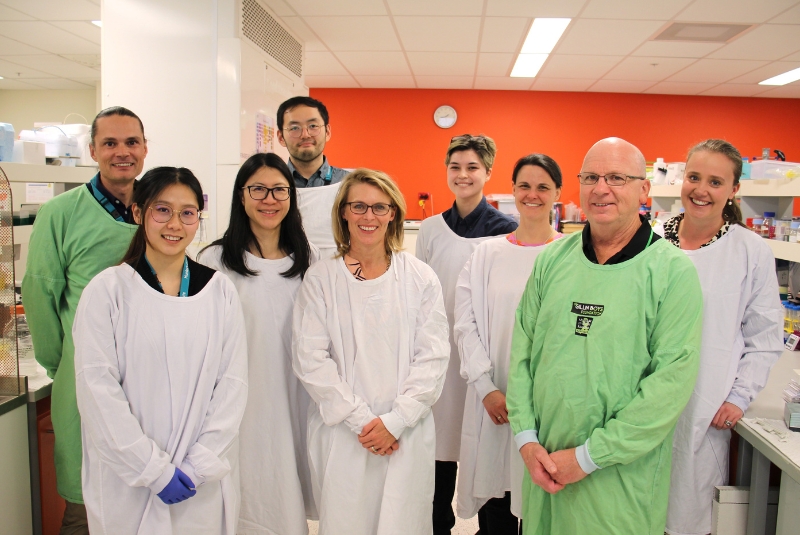
Muscle disease researchers receive cutting-edge equipment to test new treatments

Trial may bring hope to children with Duchenne muscular dystrophy
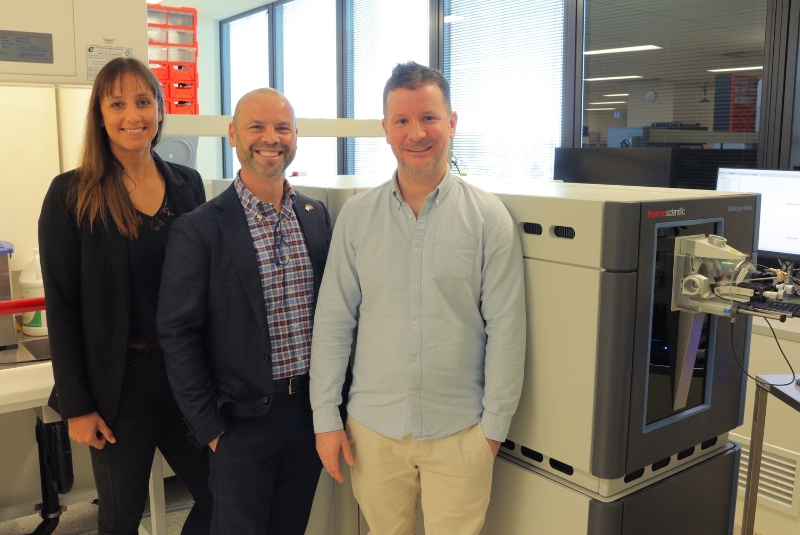
Australian-first equipment to help accelerate research into childhood diseases

Biobank aims to discover new treatments for children with genetic muscle diseases

The Gillin Boys Foundation donates $100,000 towards MCRI Duchenne Muscular Dystrophy research

Grant to advance research into common inherited nerve disorder

Skeletal muscle performance and disease

Neuromuscular disorders

Muscular dystrophy