
Diabetes and Endocrinology Research
Focussing on the impact of diabetes on the developing brain, mental health and quality of life
The Diabetes and Endocrinology group at the Murdoch Children’s Research Institute (MCRI) is internationally recognised for its research into how diabetes affects the developing brain, mental health, and quality of life in children and adolescents.
Our research focus
We aim to:
- Clearly define the impacts of type 1 diabetes on the developing brain.
- Define optimal utilisation of diabetes-related technological tools and clinical care pathways in the care of children and adolescents.
- Make non-physiologic subcutaneous insulin therapy a second-line rather than first-line therapy in type 1 diabetes.
- Trial novel therapies in youth with type 2 diabetes.
Research impact and recognition
Over the past five years, the group has presented 37 abstracts at major scientific meetings. Highlights include:
- Selection for the President’s Oral Session at the American Diabetes Association’s 75th Scientific Sessions.
- Multiple Best Oral Presentation Awards at the International Society for Pediatric and Adolescent Diabetes (ISPAD) conferences (2008, 2012, 2015, 2017 and 2018).
Changing clinical practice
Our research has influenced clinical care at local, national, and international levels by:
- Raising awareness of the effects of diabetes on brain development and mental health.
- Emphasising the importance of setting metabolic goals in clinical care.
- Developing new methods to measure glycaemic variability using continuous glucose monitoring data.
Key research highlights
- Mental health and cognition: Among the first to reveal high rates of DSM IV mental health disorders in adolescents with type 1 diabetes and to describe the “rule of thirds” in childhood diabetes, affecting IQ, education, and care continuity.
- Clinical trials and technology: Conducted the world’s first RCTs on sensor-augmented insulin pump therapy and case management during transition to adult care.
- Innovative tools: Developed the CONGA metric for glycaemic variability and a predictive questionnaire for successful adoption of diabetes technology.
- Brain and diabetes: Identified subclinical cerebral oedema during diabetic ketoacidosis as a predictor of cognitive outcomes, and pioneered the use of functional MRI (ASL and BOLD) to study brain responses to glucose extremes.
- Neuroimaging breakthroughs: First to show that hypo- and hyperglycaemia alter connectivity in the brain’s default mode network.
Meet the Diabetes & Endocrinology team
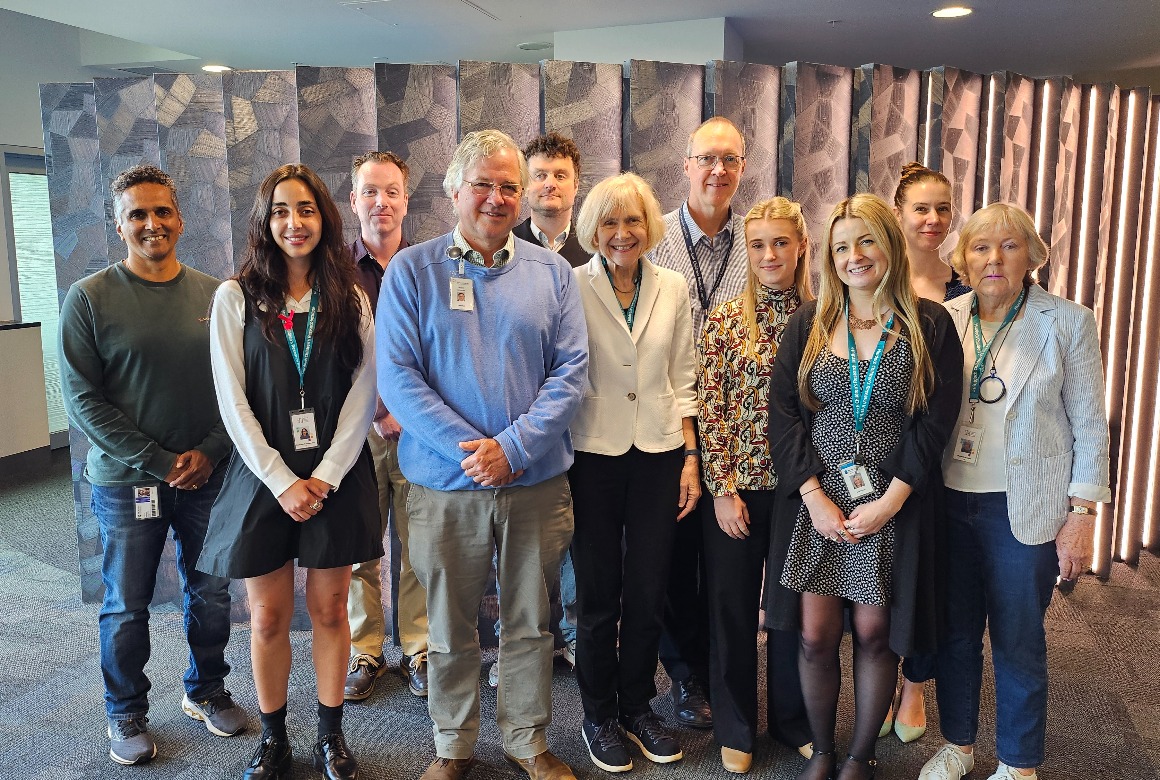
From left to right: Velandai Srikanth (Monash University), Stephanie Antonopoulos (MCRI), Chris Moran (Monash University), Fergus Cameron (MCRI), Chris Adamson (MCRI), Eva Feldman (UniMichigan), Richard Beare (MCRI/Monash), Caroline Nicholas (MCRI), Amy Brown (MCRI), Taya Collyer (Monash) and Elisabeth Northam (MCRI)
More information
Group Leaders

Team Leaders
Group Members









Our projects

CLARiFY diabetes complications study
The Cognition and Longitudinal Assessments of Risk Factors over 30 Years (CLARiFY) diabetes complications study is identifying lifelong factors that impact brain health and outcomes in Type 1 Diabetes
Read more...Define optimal utilisation of diabetes-related technological tools and clinical care pathways in the care of children and adolescents
- Collaborating with the Australian Paediatric Diabetes Technology Research Consortium in various diabetes technology clinical trials.
- Assess the priority given by parents of children with type 1 diabetes for specific diabetes support compared to extra generic school support using the Discrete Choice Experimentation methodology.
- Study outcomes of primary care in diabetes diagnosis using the DIRECT T1DM (Decision-support for Integrated Real-time Evaluation & Clinical Treatment of Type 1 Diabetes Mellitus) tool with the Hiscock MCRI Group.
- Study the Diabetes RAMP (Remote assessment module via Portal) to assess the empowerment of families to enhance self-management skills, reduce unplanned contact with the healthcare team and enhance mental health screening.
Make non-physiologic subcutaneous insulin therapy a second-line rather than first-line therapy in type 1 diabetes
- Establish a T1D Immunotherapy Centre at RCH/MCRI and for this to be the major paediatric diabetes immunotherapy centre in Australasia (external collaborators-Australian T1D Immunotherapy Collaborative (AusT1D) with the Stanley and Pellicci MCRI group.
- To complete The BANDIT trial (Baricitinib in New-onset type 1 Diabetes Trial) in 2023 with St Vincent’s Institute, the Royal Melbourne Hospital and The Women’s and Children’s Hospital, Adelaide.
- Start to establish immunotherapy in T1D as a standard of care (similar to an oncology model) where every newly diagnosed child will be enrolled in a clinical trial with the Diabetes Immunotherapy Consortium.
- Immunologically phenotype children with T1D to define what would be optimal immunotherapies with the Stanley and Pellicci MCRI Groups and the St Vincent’s Institute.
- Generate new candidate immunotherapeutic agents using an iPSC “diabetes in a dish” model with Stanley and Pellicci MCRI Groups and the St Vincent’s Institute.
Trial novel therapies in youth with type 2 diabetes
- Commence trials with novel oral hypoglycaemic agents in Type 2 diabetes with the Melbourne Children's Trials Centre (MCTC).
Funding
Thanks to our supporters.
- The Program for Neurology Research and Discovery, University of Michigan
- The Royal Children’s Hospital Foundation
- National Institutes of Health, USA
- Juvenile Diabetes Research Foundation
- University of Melbourne, Networked Society Institute
Collaborations
We collaborate with leading institutions worldwide, including:
- Academic Unit, Medicine, (Peninsula clinical School), Monash University
- Department of Neurology, The University of Michigan
- The Florey Institute, the University of Melbourne
- Hvidovre International Study Group on Childhood Diabetes
- Department of Paediatrics, University of Cambridge
Australian T1D Immunotherapy Collaborative (AusT1D)
- St Vincent’s Institute, Melbourne
- The Royal Melbourne Hospital
- Walter and Eliza Hall Institute
- Women’s and Children’s Hospital, Adelaide
- Westmead Children’s Hospital, Sydney
Australian Paediatric Diabetes Technology Research Consortium
- Princess Margaret Hospital, Perth
- Women’s and Children’s Hospital, Adelaide
- Westmead Children’s Hospital, Sydney
Featured publications
Cameron FJ, Northam EA, Ryan CM. The effect of type 1 diabetes on the developing brain. Lancet Child Adolesc Health. 2019 Jun;3(6):427-436. doi: 10.1016/S2352-4642(19)30055-0. Epub 2019 Apr 12. PMID: 30987935.
Cameron FJ, Wherrett DK. Care of diabetes in children and adolescents: controversies, changes, and consensus. Lancet. 2015 May 23;385(9982):2096-106. doi: 10.1016/S0140-6736(15)60971-0. PMID: 26009230.
Cameron FJ, Scratch SE, Nadebaum C, Northam EA, Koves I, Jennings J, Finney K, Neil JJ, Wellard RM, Mackay M, Inder TE; DKA Brain Injury Study Group. Neurological consequences of diabetic ketoacidosis at initial presentation of type 1 diabetes in a prospective cohort study of children. Diabetes Care. 2014 Jun;37(6):1554-62. doi: 10.2337/dc13-1904. PMID: 24855156; PMCID: PMC4179516.
Northam EA, Lin A, Finch S, Werther GA, Cameron FJ. Psychosocial well-being and functional outcomes in youth with type 1 diabetes 12 years after disease onset. Diabetes Care. 2010 Jul;33(7):1430-7. doi: 10.2337/dc09-2232. Epub 2010 Mar 31. PMID: 20357379; PMCID: PMC2890334.
Cameron FJ, Northam EA, Ambler GR, Daneman D. Routine psychological screening in youth with type 1 diabetes and their parents: a notion whose time has come? Diabetes Care. 2007 Oct;30(10):2716-24. doi: 10.2337/dc07-0603. Epub 2007 Jul 20. PMID: 17644619.